


Thursday, 17. May 2012 :: 15:52
Croatian National Tourist Board
Association of Croatian Travel Agencies
The Kvarner County Tourism Office
Tourism Office Opatija
Opatija - 160 Years of Tourism
Opatija

Top Sights

The Angiolina park - Villa AngiolinaVilla "Angiolina" is the building that certainly marked the beginning of the tourist epoch in the history of Opatija. Saint Jacob’s Church Pending its building in 1844. (actually a reconstruction of an older building owned by baron Haller von Hallerstein), Opatija was a relatively large settlement with about 120 houses, clustered mainly around plots further away from the sea coast and chiefly oriented towards fishing and seafaring.

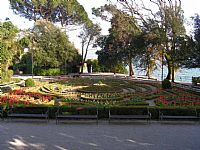
The Park of Sv. JakovThe central Opatija park is a horticultural monument covering an area of 3.64 hectares. It is divided into 60 fields and about 159 plant species grow here. A great number of plants originate from distant parts of the world and they are not typical for this region.

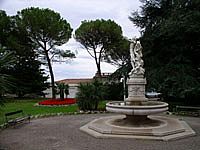
The Fountain - Helios and Selena The fountain Helios and Selena is located in beautiful park opposite the Imperial hotel near the church of St Jacob.

It's the work of the sculptor Hans Rathautskog from Graz, by Madonna, and to Theodor Billroth. The fountain represents the Sun and the Moon, the personification of the mythological characters brother and sister.

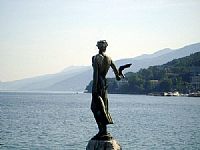
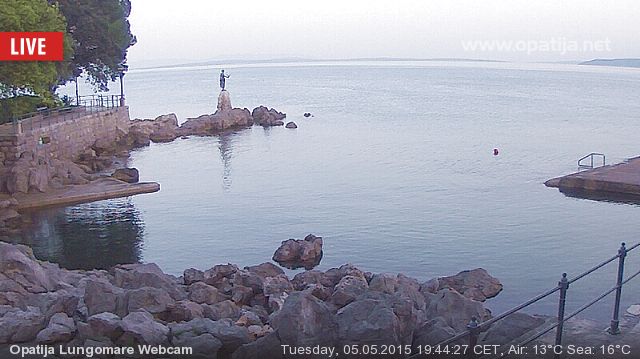
Maiden with the SeagullWork of the sculptor Zvonko Car, placed near the sea in 1956. It is one of the symbols of Opatija.

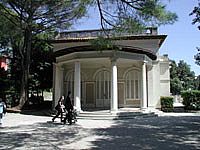
Art pavilion "Juraj Matija Sporer"An exhibition space named after the physician dr. Juraj Matija Sporer (in 1859 he suggested the establishment of a society for the construction of Opatija as a sea resort and a natural health center)

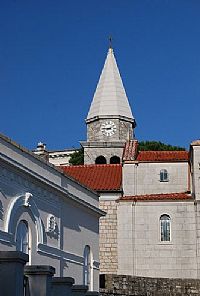
St. Jakov's ChurchBuilt on the foundations of the past Benedictine monastery, it is mentioned for the first time in 1439. To the left, near the church, the monastery and the cloister are located , with a well in the middle. Between the church and the monastery stands the stone bell-tower.

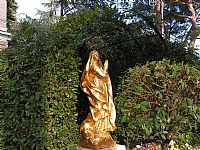
Madonna del MareThe original of this gilded replica was originally located where today stands the famous “Girl with the Seagull'', watched over the souls of count Kesselstatt and countess Fries who had drowned in 1891 close to this cape.

Monument to Friedrich Julius SchullerGeneral Manager of the Southern Railways Association, Friedrich Julius Schüller, with the capital of which he bought "Villa Angiolina", built "Hotel Kvarner", its annexes, other hotels and rest centres. He is considered to be the predecessor of the development of Opatija as a modern tourist resort.

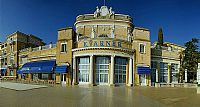
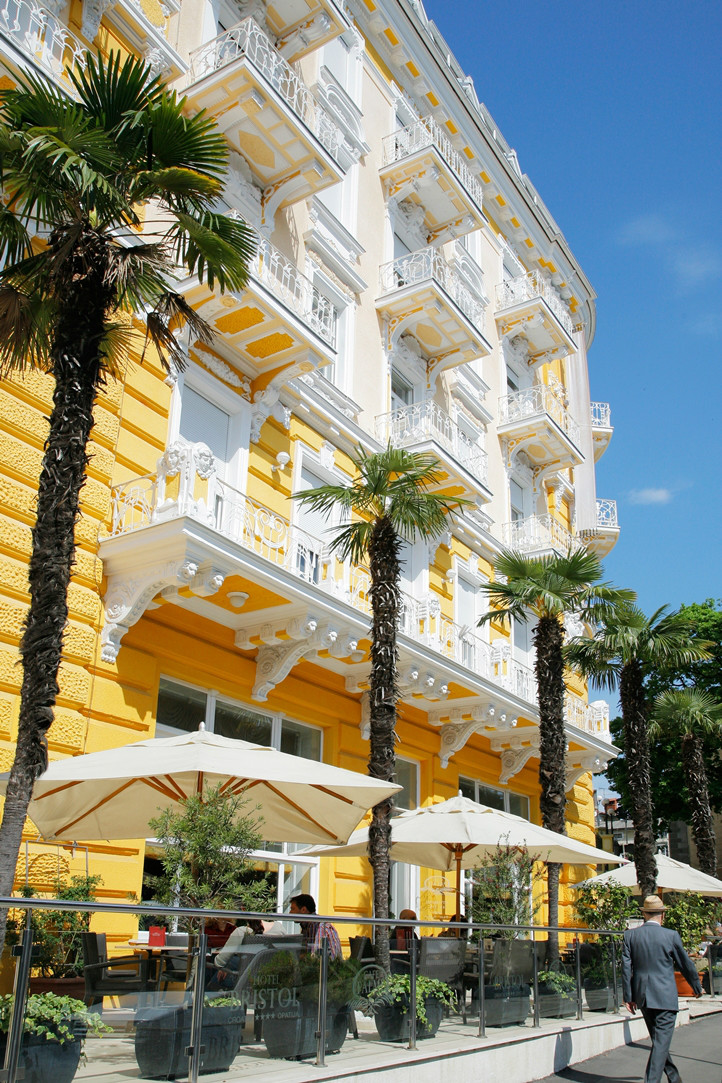
Hotel KvarnerThis was the first hotel in Opatija, and probably on the eastern coast of the Adriatic.

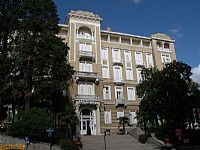
Hotel ImperialThis was the second hotel to be built in Opatija. As soon as it became evident that the Kvarner would not be able to accommodate the steadily increasing number of guests, the Southern Railways began building a new hotel.

The Open Air Summer TheaterHere, where motion pictures are shown today was, according to the plans of the Austrians, supposed to have been a huge “health resort palace” (Kurpalast) with dance and concert halls, a pool with simulated waves, shops and cafés.

Church of the AnnunciationAs early as 1906 the bishop of Trieste, Franjo Nagl, laid the foundation stone for the neo-Romanesque edifice with its pronounced green cupola that can be seen from afar.

Villa AmaliaIt was built in 1890 as an annex to the six years older hotel Kvarner.

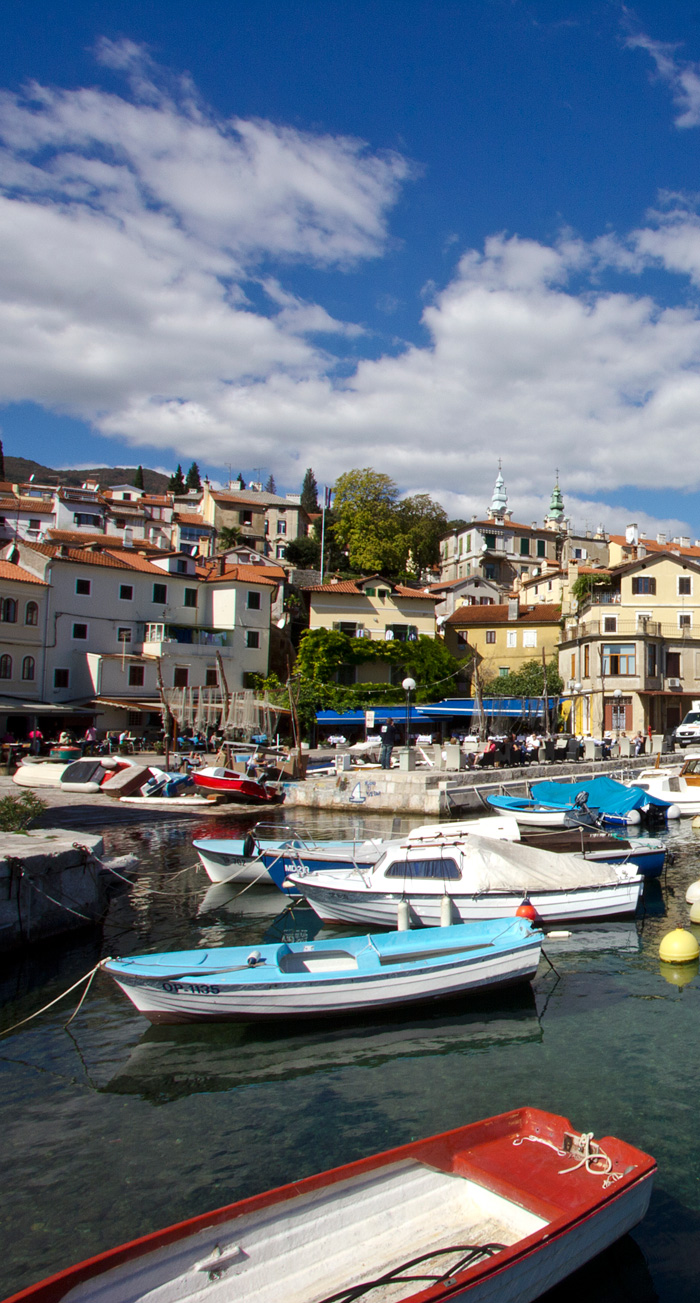
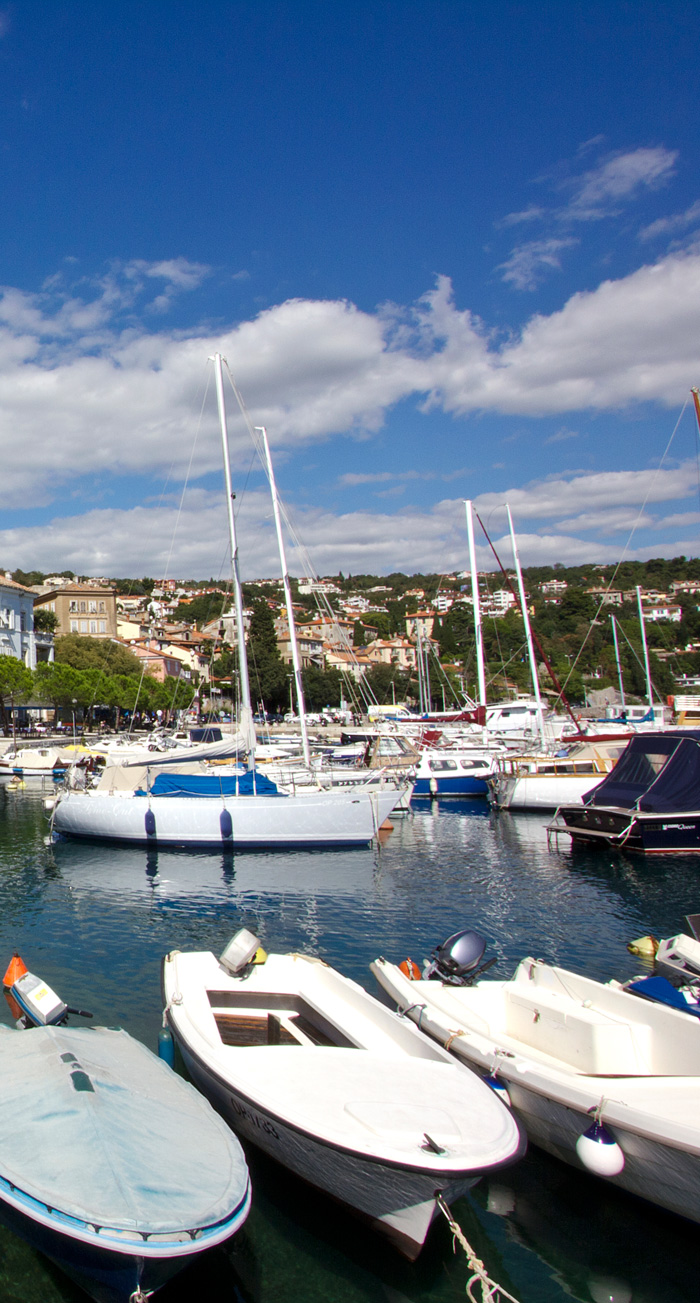
The PortFrom the pier, which has for the townspeople of Opatija on several occasions in history been the scene of important events (the dismay caused by the arrival of the Italian navy in December of 1918, the celebration of the capitulation of Italy in September 1943), one has the best view of the entire “North Strand” (Nordstrand).

Lungomare (The Seaside Promenade)Built in phases, this path stretches from Preluka to Lovran and its total length is approximately 12 kilometers.

Croatian Walk of FameCroatian Walk of Fame is located in Opatija's Slatina. The first eight are set to honor Nikola Tesla, Miroslav Radman, Dragutin Tadijanovic Krleza, Drazen Petrovic, Janica Kostelic, Kresimir Cosic and Oliver Dragojevic.

Villa Minach In the house next to the Amfora restaurant the Hungarian count Gyula Andrássy spent the last days of his life as a political rebel and advocate for the Dual Monarchy. It has been rumored that the empress Elisabeth paid him three unofficial visits here - were the two of them really lovers?

The Croatian Museum of TourismThe Croatian Museum of Tourism is a specialized national institution that gathers, keeps, researches and presents material and non-material tourist heritage.

Astronomical Centre Rijeka Astronomical Centre Rijeka comprises 545 m2 of closed space and 325 m2 of open space. It includes a planetarium, an observatory, a conference room, a meeting room, multimedia workshop, ticket office, a café, and a panoramic terrace at the roof of the building. The facilities are entirely adapted to the needs of the users with limited mobility.
Location: Sveti Križ Hill (45° 19’ 29’’ latitude N and 14° 28’ 59’’ longitude E), 3 km from the city centre

Opatija's Twin towns — Sister citiesOpatija is twinned with 5 cities in Italy, Slovenia, Hungary and Austria.
- Castel San Pietro Terme, Italy.
- Ilirska Bistrica, Slovenia
- Balatonfüred, Hungary
- Carmagnola, Italy
- Bad Ischl, Austria

333 visitors online
42.588.440 visitors
since 1st of March, 2004.
EFEKT Travel & Tourism

HR-AB-51-040061007

EFEKT d.o.o.
M. Tita 216
HR-51410 Opatija
C R O A T I A

Tel:+385 51 272 222
Fax:+385 51 740 027

Valid XHTML 1.0 Transitional Valid CSS!